Written by Hikaru Ikeda
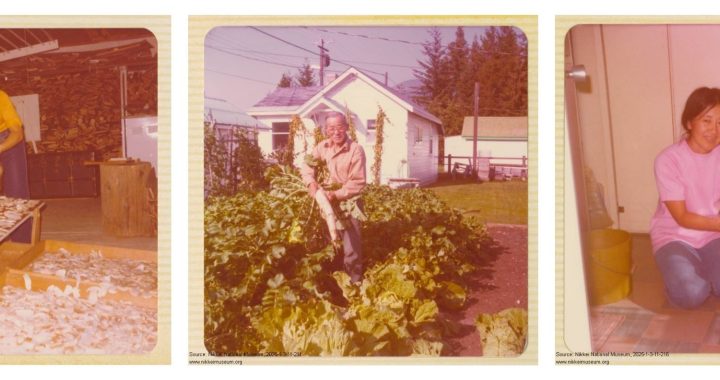
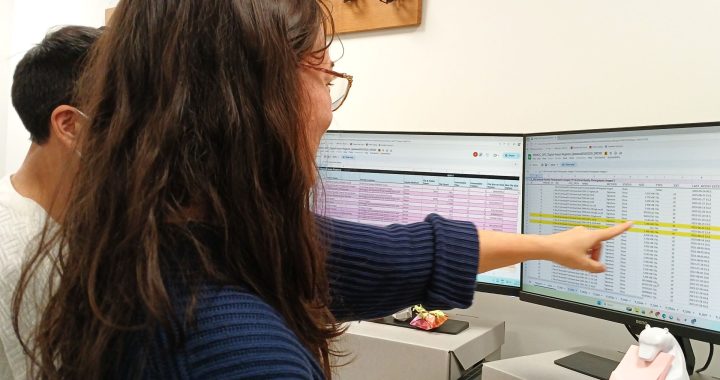
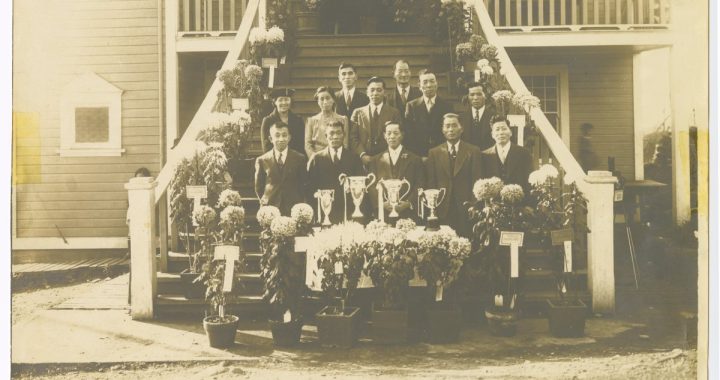
While developing her whirlwind live documentary project Electric Neon Clock, A.S.M. Kobayashi came across the Nagasaka Family collection in the archives at the Nikkei National Museum & Cultural Centre (NNMCC). The discovery of this eclectic and extensive collection of quotidian objects, keep sakes, Buddhist altar fittings, farm tools, Second World War registration cards and a homemade slingshot gave new insights into her family history and their lives before and after their internment. With the help of the NNMCC’s team, Kobayashi spent a day documenting and exploring the collection of her great aunt and uncle, Shigeko and Mas Nagasaka.
Interview
Hikaru Ikeda: Can you speak about your artistic practice and your current project, Electric Neon Clock, which you conducted research for at the NNMCC this summer?
Alison S. M. Kobayashi: My video, illustration, installation and performance work is based on found objects that come into my life by chance. My performance, Say Something Bunny! unpacked an audio recording made by a family in the 1950s. Audience members would ask, “Why did you obsessively research a family you don’t even know?” It forced me to reflect on how little I knew about my own family history. Could I try to approach it with the same rigor of a multiyear research project? When I encountered my great grandfather’s Second World War custodial file documenting his forced relocation and dispossession [via the Landscapes of Injustice Research Database], my answer to this question was, “Yes!”. I’m getting to know my ancestors through this really dehumanizing document detailing a turbulent moment in their lives when they lost their home and community.
My visit to the NNMCC was the first time that I met some of my relatives. Meeting with Henry, Marie, Wendy and Rick Nagasaka at the archives to look at the objects that their parents had donated was such a rich spark for conversation. It brought new insights and significance to the objects. Henry remembered that the ice cream scoop in the collection was “used every Sunday after dinner as we generally had ice cream for dessert.” These objects are containers for lived history. Electric Neon Clock focuses on my family’s custodial inventory and everything they lost while also representing how they were eventually pulled apart.
H.I. As one of the archivists assisting you during your visit, it didn’t fully hit me until your family members were here that you were meeting for the first time. It was so special to be able to witness you all interacting with the objects, and sharing and recording your family’s stories and memories that they brought up. Seeing your rigor and care was really beautiful.
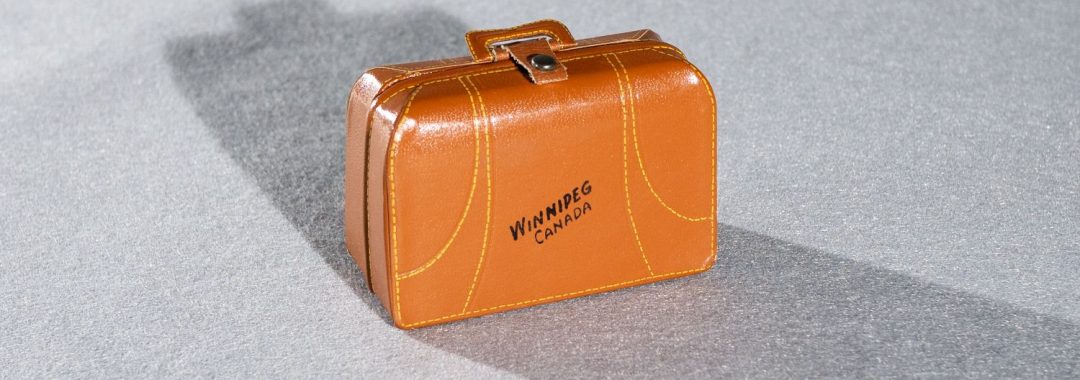
A.S.M.K. As an institution, you’re preserving these objects for the community. Donating these objects to an archives can relieve heirs of the responsibility to preserve these treasures. It also allows the object to receive an elevated level of care, storage, handling and the required resources that enable these objects to endure the test of time both within a context and a larger narrative. Your work as archivists ensures the survival of these objects, like that miniature suitcase sewing kit, it contains the story that Rick told me about the family’s cross-country road trip. That little object represents a rare chance of a family being together after being scattered across Canada post-war. It’s a special experience to touch an archival collection, even if it’s with gloves on—to touch that history.
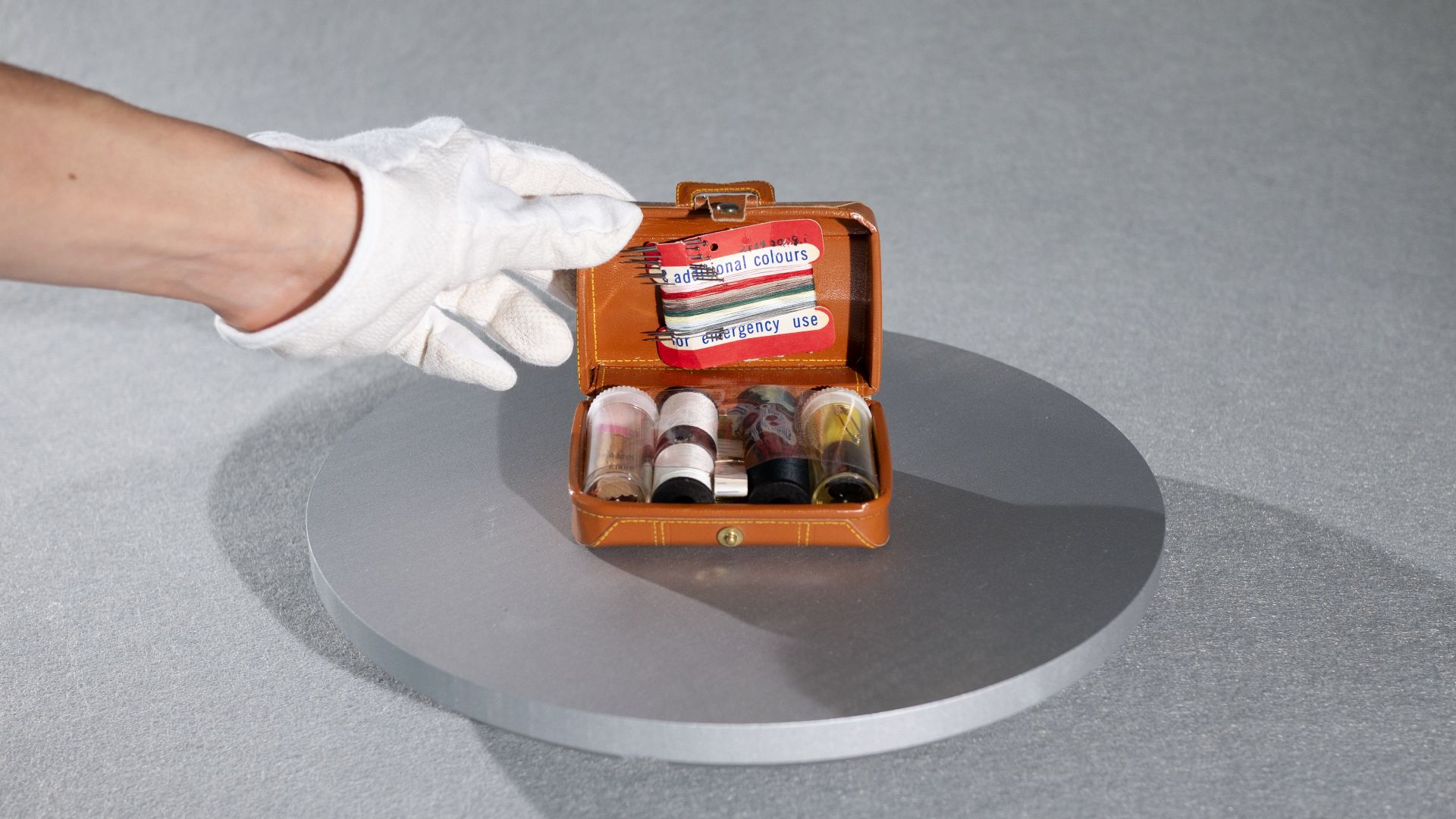
H.I. That reminds me of the different kinds of value given to objects and materials. For example, materials may act as evidence of being created at a certain moment in time or documenting activities. That suitcase was created as a Winnipeg souvenir, signifying that a family member was likely there. It can serve as an anchor in time which can help with fleshing out whole stories. Objects can have simultaneous and different kinds of value, such as cultural and community significance.
I also really appreciate you naming archival labour. As staff, we are charged with taking care of things; making sure that they are stored in a good environment and accessed and handled in ethical and safe ways. We try our best to make it possible for researchers, especially family members, to access materials, and to be able to learn from and engage with them. There was a really beautiful blog post by Archivist R.L. Gabrielle Nishiguchi, How archives can protect human rights, highlighting materials documenting historical injustice toward Japanese Canadians. In it, they talk about how our job is to preserve the integrity of these materials long-term because there is power in that evidence—not merely because the material exists in an archives somewhere, but because people use it to do research, produce works and take action in support of human rights and justice.
A.S.M.K. I saw how Lisa Uyeda [NNMCC Collections Manager] is encyclopedic in her knowledge of the community and archives. When researchers meet archivists, it creates this very rich and dynamic experience of receiving their knowledge and insights. They’re able to connect you to things that you didn’t even know existed. Many of us are surprised to realize that traces of our families live in archives, libraries and collections, just waiting for us to find them.
H.I. I’m excited to see how your Electric Neon Clock project evolves! Have you decided if it will be a place-based or online project?
A.S.M.K. This August I’m doing an installation and performances at the Art Gallery of Mississauga. I’m hoping to tour it to New York City and across Canada.
Explore the Nagasaka Family collection online:
Alison S. M. Kobayashi is an interdisciplinary award winning artist, a Creative Capital Awardee, a Yaddo and MacDowell Colony fellow and produces special projects at UnionDocs Center for Documentary Art. www.asmk.ca
Hikaru Ikeda (they/them) is the Assistant Archivist at the NNMCC. They provide archives access and research services to the public, support donations and loans, and prepare archival materials to be cared for and shared. They hold a Master of Library and Information Studies from the University of British Columbia.
Website: centre.nikkeiplace.org/research/
Email: [email protected]