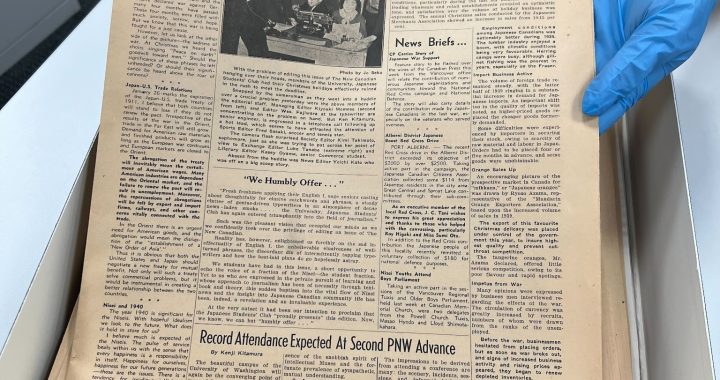
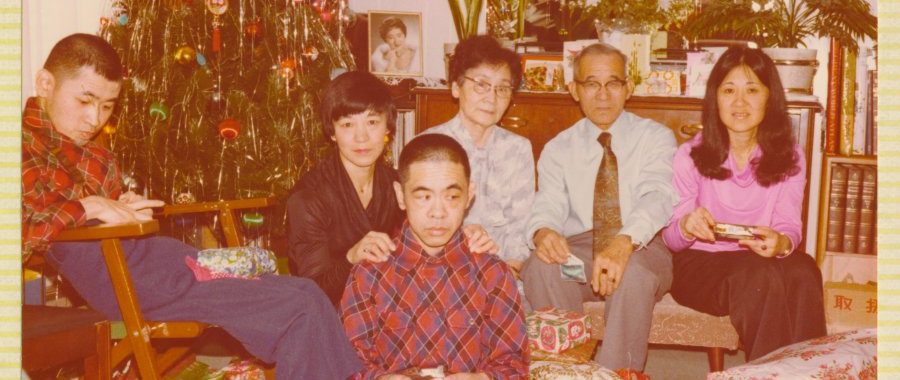
The Nikkei National Museum & Cultural Centre is proud to announce the completion of our 2025-2026 digitization project, Tomoni: Living with Ability, Atsu’s Story. Digital scans and descriptions for over 900 photographic and textual materials from the Uyeda Family of Nakusp collection (NNMCC 2025.1) are now available for viewing on our collections database at nikkeimuseum.org
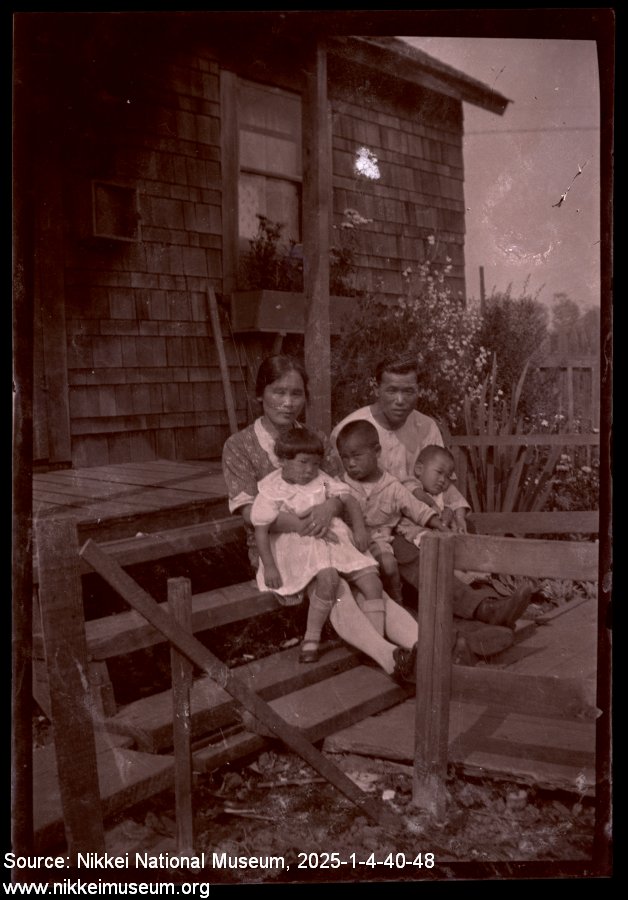
Spanning from the 1920s to 2020, the Uyeda Family of Nakusp collection captures the experiences of Yonezo and Yukiye Uyeda and their four children, Masayuki, Teruko, Atsushi, and Michiyo. The family lived in the Queensborough neighborhood of New Westminster, BC, from the 1920s until the onset of the Second World War when the Canadian Government forcibly relocated the family to Kaslo, BC, then to the New Denver internment camp. They settled in Nakusp, BC in 1947, having been prevented from returning to New Westminster due to wartime restrictions extended after the Second World War ended.
This collection is a treasure in our archives as the materials provide underrepresented perspectives on Japanese Canadian history, depicting the everyday lives of people with disabilities and the family’s navigation of medical and social service systems in acquiring care, equipment, and accessibility accommodations. Masayuki (Masa) Uyeda was born with an intellectual disability, impaired vision, and cerebral palsy. His younger brother, Atsushi (Atsu), was also born with cerebral palsy and most of his body was paralyzed except for his right arm and hand. Their sister Teruko (Terrie) experienced bouts of asthma, illness, and stress-induced hearing loss that were particularly exacerbated under the conditions of internment in Kaslo. The family’s lives before the Second World War, through internment, and post-war are detailed through their many photographs, films, textual records, and personal objects, and further contextualized through Atsushi’s own words in his autobiography I, Atsu (2019), available to read in our reference library.
Forced dispossession and internment meant the Uyeda family was limited to only forty pounds of personal belongings each to bring to Kaslo in 1942 – as Atsu said, “very difficult choices had to be made.” On February 27, 1942, the Canadian Government forced Japanese Canadians to surrender cameras, radios, automobiles, firearms, and explosives to the RCMP, including the Uyeda’s 620 Kodak Junior camera used by the young family to photograph their early life in Queensborough. The rest of their belongings were left in the supposed trusted care of the Custodian of Enemy Property and the British Columbia Security Commission (BCSC). This was intended “as a protective measure only” according to the Order in Council P.C. 1665 passed on March 7, and the promise of protection for the interests of Japanese Canadian property owners was reaffirmed by Cabinet in Order in Council P.C. 2483 on March 27.
The federal government did not keep their promise, and in March 1944 the majority of the Uyeda family’s belongings were sold at auction without their prior knowledge or consent. For unknown reasons, the camera and some items of clothing were not sold and remained in the government’s possession. The camera was returned to the family in June 1946 at Yonezo’s request, and they were able to resume capturing photographs of their family during internment in New Denver and shortly after in Nakusp. These photographs can now be viewed in the Uyeda Family of Nakusp collection.
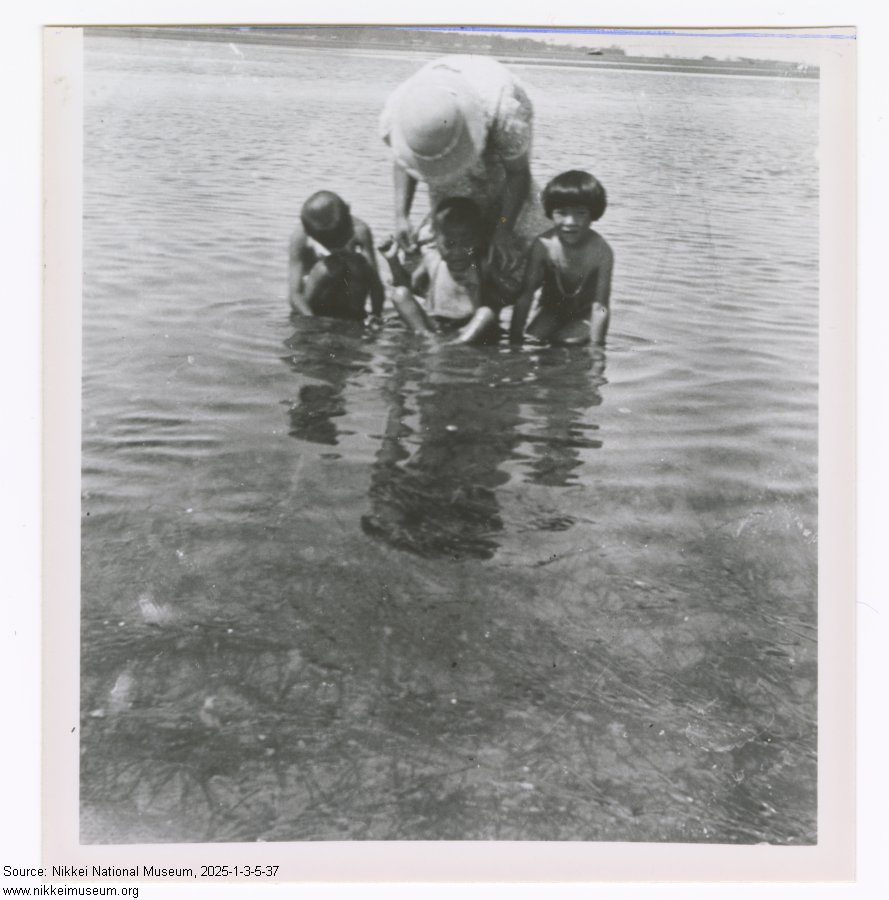
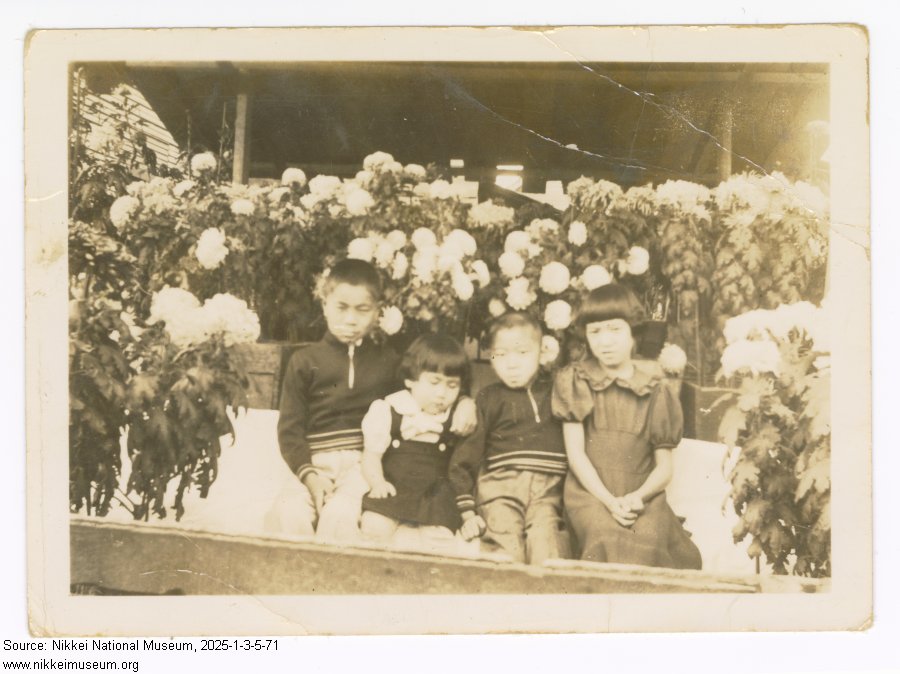
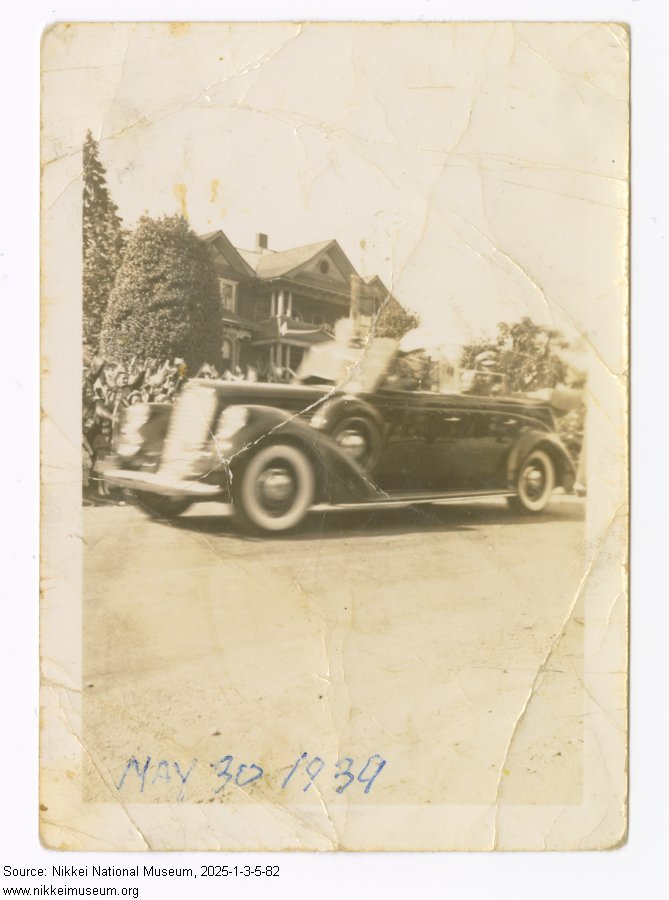
The pre-war photographs depict the issei (first generation immigrants from Japan) parents and their nisei (second generation Japanese Canadians) children, one of many Japanese Canadian families who once called New Westminster and the Queensborough neighborhood home. Yonezo Uyeda worked as a boom-man on the log floats for the Mohawk Lumber Mill after immigrating to Canada in 1919 and following a short stint on his uncle’s failed farm venture. Yukiye Fujita was well educated in Japan before marrying Yonezo in 1927 and moving with him back to Canada, where she served as the primary caregiver for the Uyeda children. Scenes include family trips to White Rock (NNMCC 2025.1.3.5.37), the children posing in front of Yonezo’s prized chrysanthemum garden (NNMCC 2025.1.3.5.71), and shots of King George VI and Queen Elizabeth’s visit to New Westminster in 1939 (NNMCC 2025.1.3.5.82).
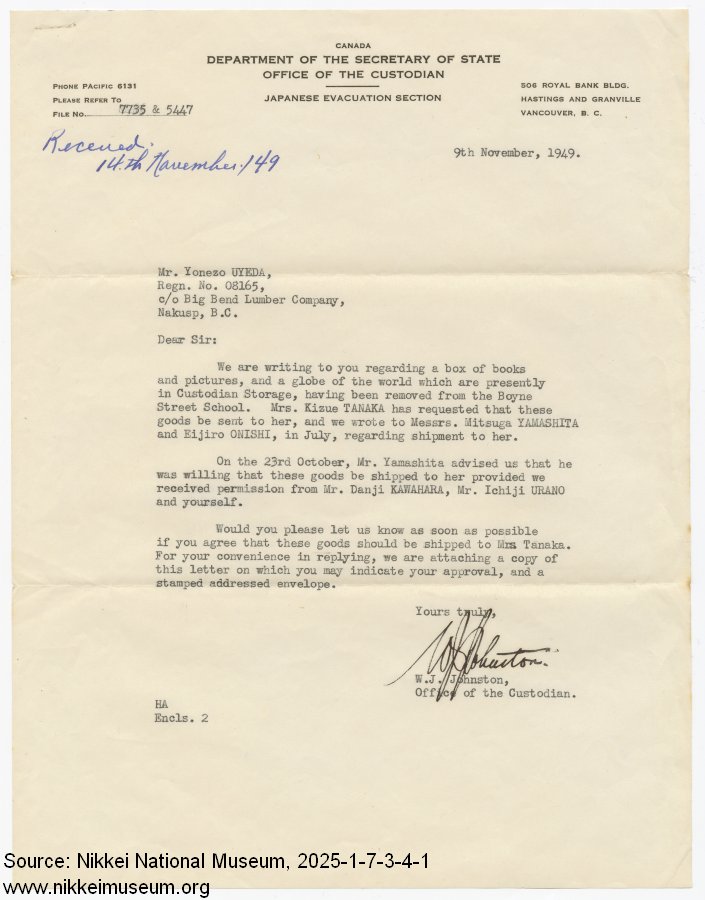
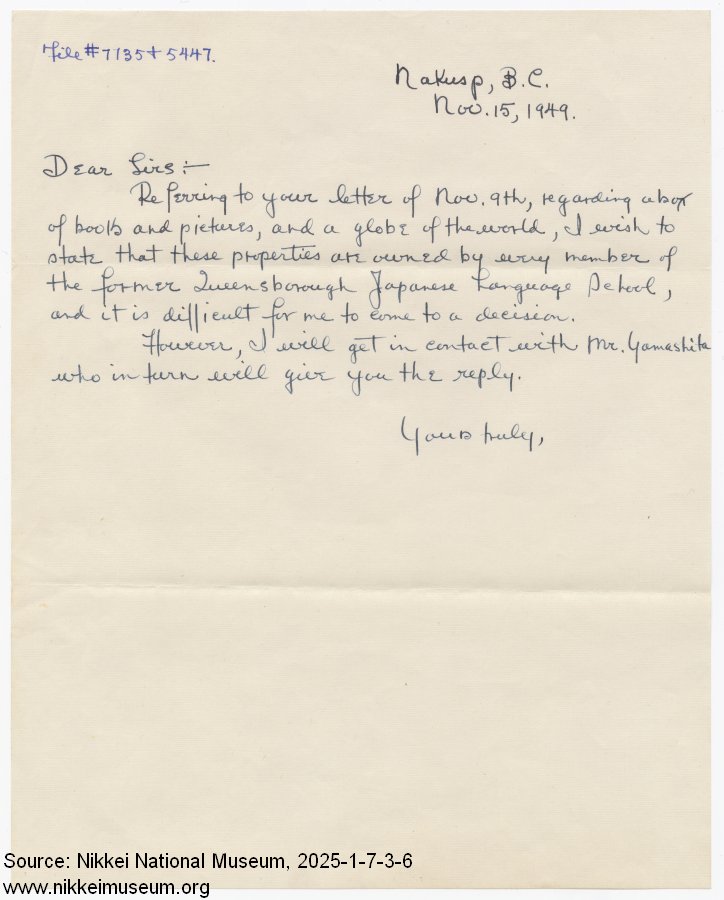
Yonezo’s lasting connection to the Queensborough Japanese Canadian community even after internment is documented in the collection’s textual records. When the Canadian Government’s Office of the Custodian asked for permission to return materials dispossessed from the former Queensborough Japanese Language School to a former teacher (NNMCC 2025.1.7.3.5.1), Yonezo replied: “I wish to state that these properties are owned by every member of the former Queensborough Japanese Language School, and it is difficult for me to come to a decision” (NNMCC 2025.1.7.3.7).
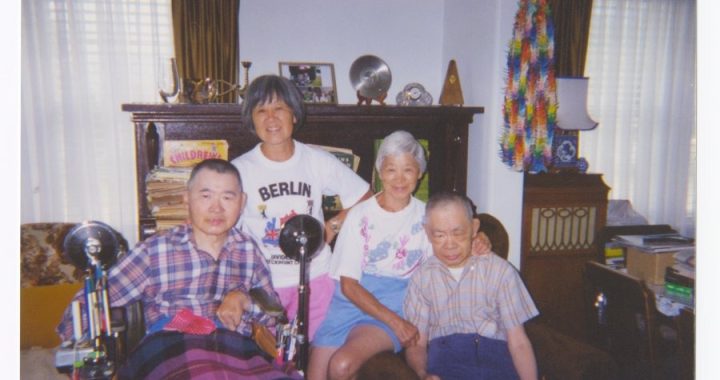
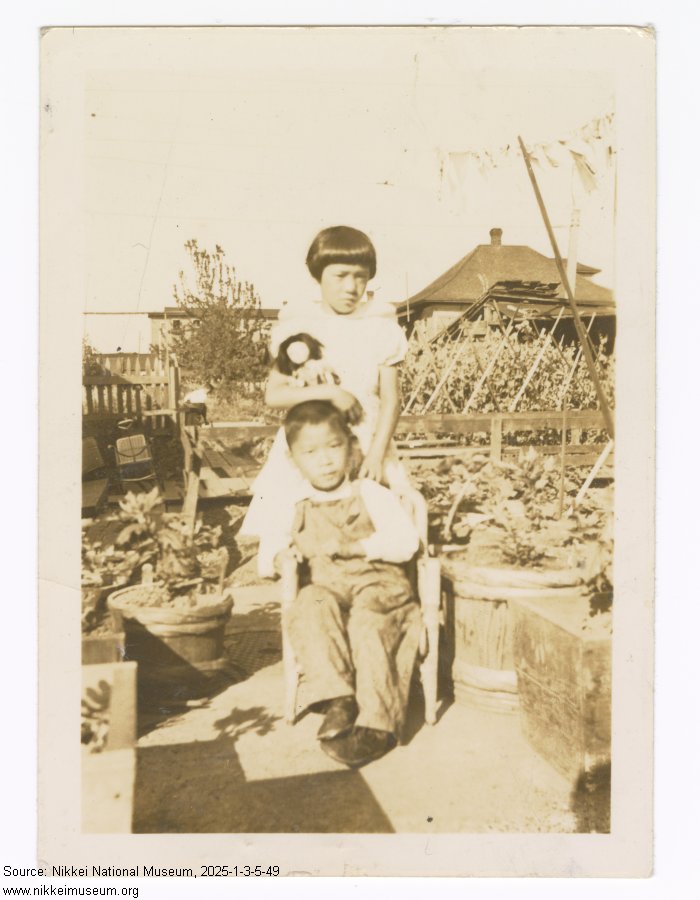
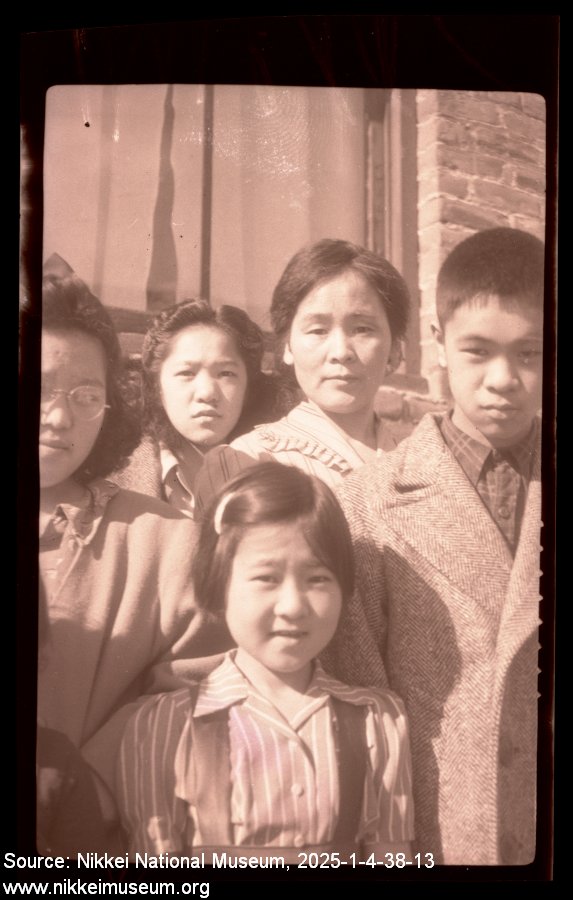
In the centre of many of the photographs, in the early photos braced by a parent, sibling, or chair (NNMCC 2025.1.3.5.49), and in the later ones sitting in his electric wheelchair, is Atsushi. Yet the central presence of Atsushi and Masayuki in these photos may not portray the reality of their public lives in the years before, during, and immediately after the Second World War. Atsushi reflected: “Mom was very protective of Masa and me. She did not want anyone to see our condition and did not want us to be seen by anyone. She felt it was her fault that we were born disabled.” This isolation was compounded by the physical environment of forced internment, where multi-story shared lodgings and gravel roads hindered Atsushi’s mobility. Notably, Atsushi does not appear in any photographs from Kaslo or New Denver, and Masayuki appears in very few (NNMCC 2025.1.4.38.13).
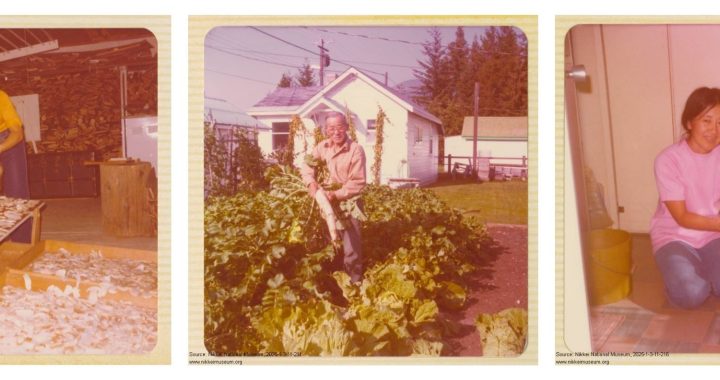
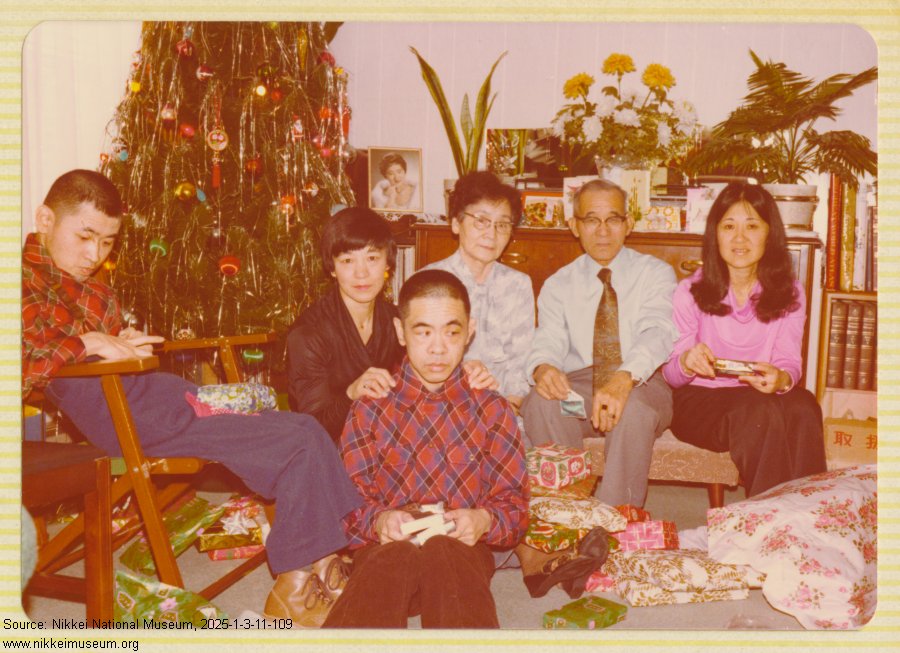
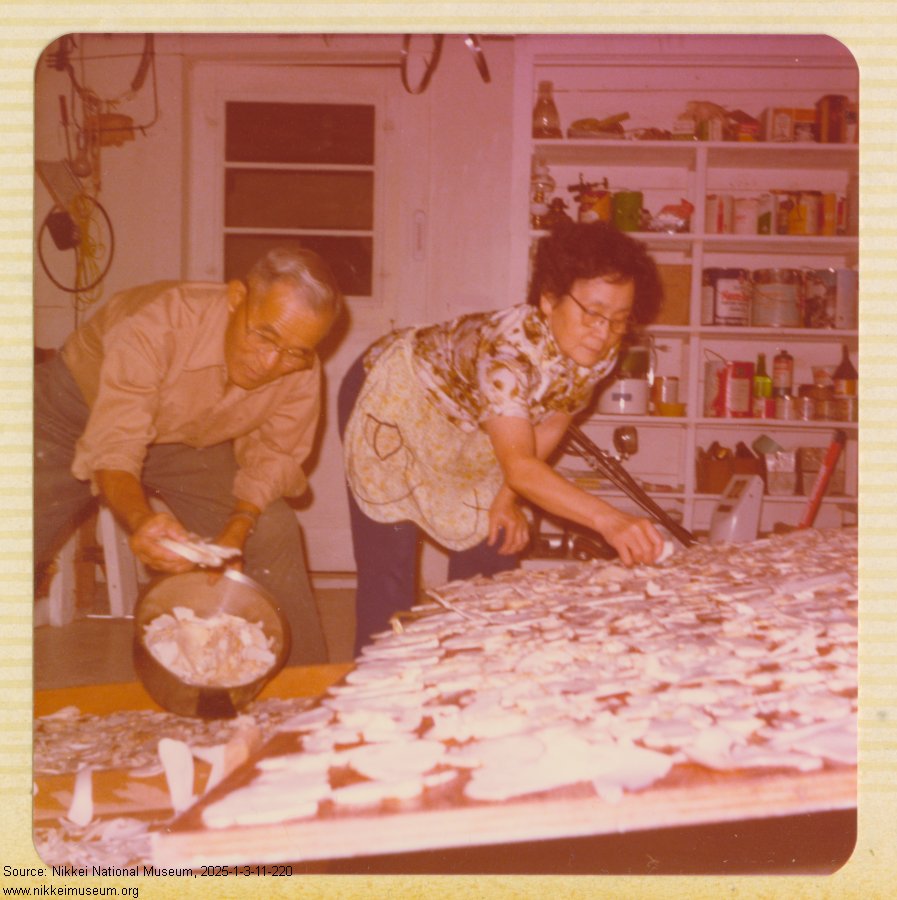
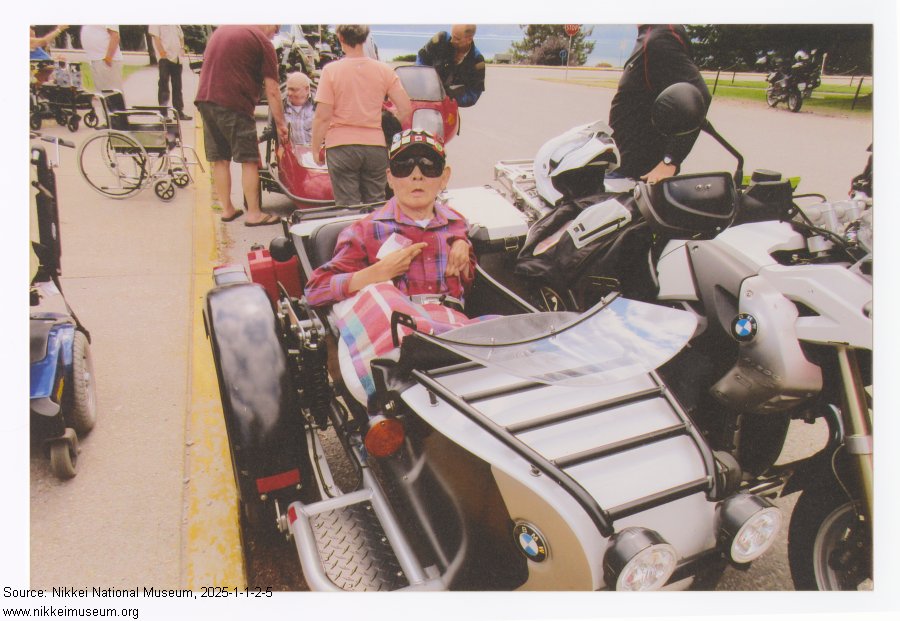
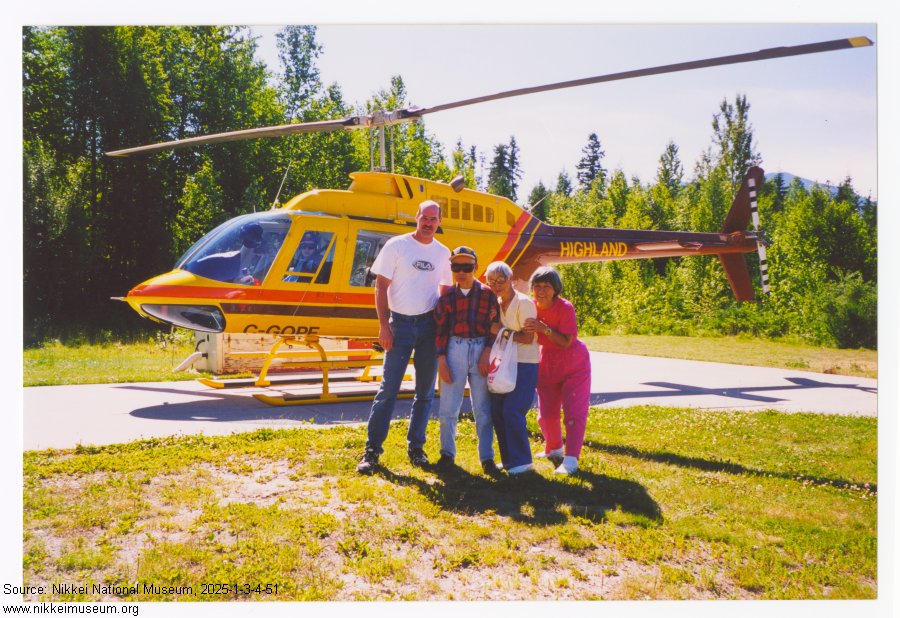
Yet Atsushi did not claim he lacked familial support: “Mom carried me everywhere, dressed me, fed me, nursed me until she was seventy-nine years of age when she had a stroke and was no longer able to care for me.” The Uyeda siblings filled in with help from hired careworkers when Yukiye was no longer able to care for him. Atsushi and Masayuki developed their own method of communication, discernible only by the two brothers, before Atsushi gained access to a typewriter and later computer while in Nakusp. The family’s love and support for each other is visible in the collection’s photographs and home movies (Home Movies; 1957-1978. Uyeda Family of Nakusp collection. NNMCC 2025.1.8.1): Christmas dinners and gift giving (NNMCC 2025.1.3.11.109), birthdays annually celebrated with the same white-and-pink-frosted cake (NNMCC 2025.1.3.4.100), foraging and preparing matsutake (pine mushrooms) together (NNMCC 2025.1.3.11.220), family excursions to motorcycle shows (NNMCC 2025.1.1.2.5) and on a helicopter (NNMCC 2025.1.3.4.51). Throughout his life Yonezo meticulously documented these family affairs in his journals, from accounts of every cent spent on household necessities and medical assistance to the harvests from his garden and family foraging expeditions (Yonezo Uyeda Journals & Account Books; 1940-1966. Uyeda Family of Nakusp collection. NNNMCC 2025.1.5.1).
Atsushi credited the family’s commitment to caring for him and living in the family home as the reason for his long life. Atsushi passed away in 2019 at the age of 88, the same year as his younger sister Michiyo; Masayuki passed away in 2015, and Teruko passed away in 2017.
What is found in the Uyeda Family of Nakusp collection is a glimpse into one Japanese Canadian family’s experiences over the span of a century living with disabilities they were born with and dispossession imposed upon them. Explore the Uyeda family’s story and more at nikkeimuseum.org.
Further resources:
Additional photographs and records created by the Uyeda family while they lived in Nakusp, BC can be found in the Arrow Lakes Historical Society Archives: https://alhs-archives.com/creator/uyeda-family/
Research records of Japanese Canadian history in New Westminster, BC at the New Westminster Archives: http://archives.newwestcity.ca/search.aspx
Support and stay up-to-date with the ongoing Place-Based Research and Dissemination of the History of Japanese Canadian Residents of New Westminster project led by the Japanese Canadian Legacies Society (JCLS) and the City of New Westminster Museum and Archives: https://jclegacies.com/an-invitation-to-japanese-canadiansfrom-new-westminster/
Explore records related to Japanese Canadian history and forced dispossession through the Landscapes of Injustice Archive Research Database: https://loi.uvic.ca/archive/index.html
Acknowledgements:
The project team is Sam Frederick, Chase Nelson, Jeffery Chong, Hikaru Ikeda, Keiko Kaneko, Reiko Pleau, Sakura Taji, Grace Wang, Daien Ide, and Lisa Uyeda, with support from Roger Pratt. Volunteer description support provided by Joy Tsukishima. Volunteer translation support provided by Fumiko Miyahara.
This project was made possible through generous support from the University of British Columbia’s Irving K. Barber BC History Digitization Program, the Uyeda Family estate, Gwendolyn Papov, and Roger Pratt.